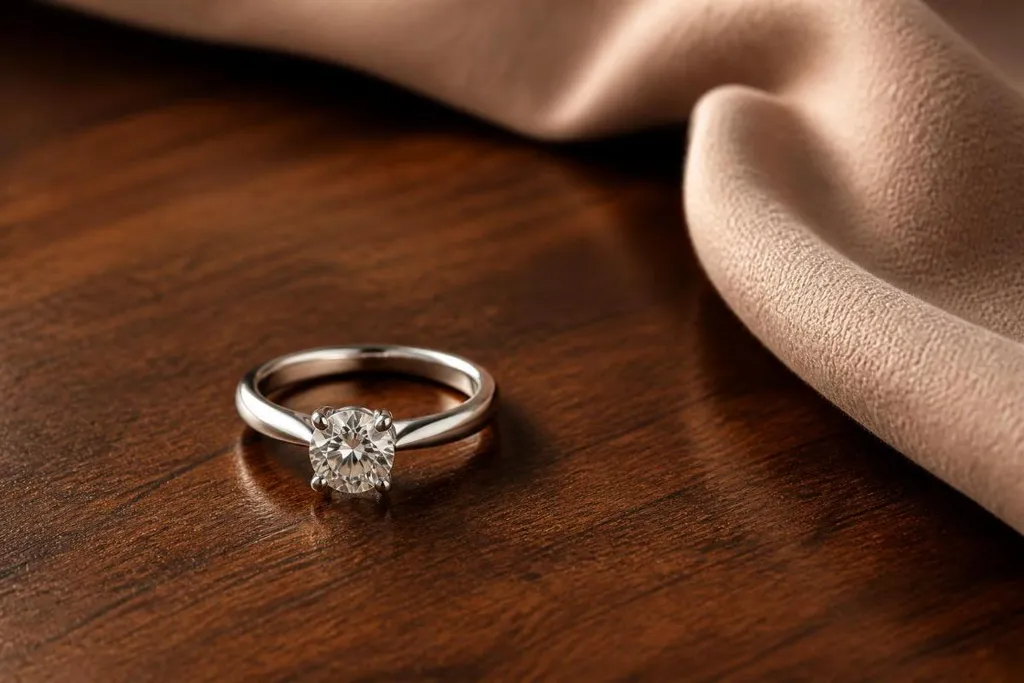
Choosing a natural diamond engagement ring is rarely as simple as finding the highest grade within a budget. Two diamonds can look similar on paper yet create very different impressions once they are set and viewed on the hand. Cut, dimensions, shape and setting all influence what the eye actually sees, while personal style determines which of those qualities matters most.
For anyone comparing beautiful natural diamond engagement rings, the most useful approach is to consider the diamond and ring as one composition. Certification and the traditional quality factors provide an important framework, but they should support visual judgement rather than replace it. A carefully balanced stone in the right setting can be more compelling than one chosen simply because a particular specification is higher.
Use the 4Cs as a Starting Point
Carat, colour, clarity and cut provide a structured way to compare natural diamonds, but each factor affects appearance differently.
Cut is especially important because it influences how effectively a diamond interacts with light. In round brilliant diamonds, well-balanced proportions can contribute to strong brightness, fire and scintillation. For fancy shapes, evaluating the actual appearance becomes even more important because proportions vary considerably.
Colour grading describes the degree of colour present in a diamond, while clarity considers internal and external characteristics. Higher grades command premiums, but the practical difference between grades is not always obvious without magnification.
An eye-clean diamond with a slightly lower clarity grade may therefore be more attractive to a particular buyer than paying extra for characteristics they cannot see. Similarly, a near-colourless stone can offer a beautiful appearance, particularly when its colour works naturally with the chosen metal.
The aim is balance, not automatically selecting the highest grade in every category.
Look Beyond Carat Weight to Actual Dimensions
Carat is a measure of weight rather than visible size. This distinction matters because diamonds with identical carat weights can have different face-up dimensions.
Shape influences perceived scale as well. Oval, pear and marquise diamonds distribute their weight along elongated outlines and may provide greater coverage along the finger than a round stone of comparable weight. Cushion and princess cuts create a different type of presence through their fuller proportions.
This is also why someone might genuinely prefer a 2-carat natural diamond over a 1-carat stone for reasons beyond status. A larger diamond may provide the width or length needed to balance a broader band, larger hand or particular setting. Conversely, a smaller centre stone might look more refined on a delicate finger or leave room for an intricate halo or substantial side stones.
Compare millimetre measurements alongside carat weight and consider how the stone looks within the complete ring.
Choose a Shape That Reflects Personal Style
Diamond shape often has a greater influence on a ring's personality than small differences in grading.
Round brilliant diamonds offer symmetry and a familiar sense of timelessness. Oval cuts retain softness while creating a more elongated silhouette. Emerald and Asscher cuts provide a calmer, architectural appearance through step faceting, while radiant and princess cuts combine stronger geometry with livelier sparkle.
Cushion cuts have softer corners and can move easily between contemporary and vintage-inspired settings. Pear and marquise diamonds introduce directional shapes that can visually lengthen the finger.
Rather than selecting a shape because it is currently popular, consider the jewellery the recipient already wears. Someone drawn to clean lines may naturally prefer an emerald or princess cut, while a wearer who favours softer forms may feel more comfortable with an oval or cushion.
Let the Setting Complete the Diamond
The setting controls how the centre diamond relates to the hand.
A solitaire keeps attention firmly on the stone and makes its shape particularly important. Diamond-set shoulders add brilliance without substantially altering the centre outline, while halo settings can increase the ring's overall visual footprint.
Trilogy designs create a wider composition and allow the side stones to influence the centre diamond's perceived scale. Setting height also matters: a higher setting can create prominence and make wedding-band pairing easier in some designs, while a lower profile may feel more practical for everyday wear.
Metal provides the finishing context. Platinum and white gold create a cool appearance, while yellow and rose gold introduce warmer contrast and can noticeably change the ring's character.
Final Thought
Comparing natural diamond engagement rings is most useful when specifications are treated as tools rather than targets. The best diamond is not automatically the one with the largest carat weight or highest clarity grade.
Consider light performance, visible dimensions, shape and setting alongside certification. When those elements are balanced around the wearer's taste and everyday life, the result feels considered rather than specification-driven and that is what gives an engagement ring lasting personal value.