Understanding the Tree House Life Concept
The concept of tree house life embodies a unique blend of adventure, environmental consciousness, and a desire to reconnect with nature. Originally the domain of childhood imagination, tree houses have evolved into sophisticated structures that offer versatile living spaces. They invite us to escape the hustle and bustle of daily life, crafting environments that are both relaxing and stimulating. When exploring options, tree house life provides comprehensive insights into how these elevated dwellings can transform our living experience.
What Does Tree House Life Mean?
Tree house life can be defined as the lifestyle choice centred around residing in or spending time in tree houses. This lifestyle promotes a closer relationship with the environment while offering a whimsical escape from traditional living spaces. It is often associated with relaxation, creativity, and the freedom to enjoy nature in a unique way.
The Evolution of Tree Houses: From Childhood Dreams to Modern Retreats
Tree houses have traversed a long journey from makeshift childhood hideaways to sophisticated retreats. Historically, they were simple wooden structures or platforms built in backyards or forests, serving as play areas for children. Today, they are designed with architectural finesse, featuring modern amenities such as electricity, plumbing, and luxurious furnishings. Architects are now focusing on innovative designs that blend seamlessly with their natural surroundings, utilising materials that not only enhance aesthetics but also reduce environmental impact.
Benefits of Embracing a Tree House Life
- Connection with Nature: Living in a tree house encourages a deeper appreciation for the natural world, providing residents with stunning views and a tranquil atmosphere.
- Unique Living Experience: Tree houses offer a distinctive lifestyle that breaks away from the mundane, allowing for a sense of adventure and creativity.
- Sustainable Living: Many modern tree houses are built with eco-friendly materials and practices, promoting sustainable living.
- Flexibility: Tree houses can serve various purposes, from a home office to a guest house or an artist's retreat.
Designing Your Ideal Tree House
Creating your dream tree house involves careful consideration of various factors to ensure that the final structure meets your needs and desires. Thoughtful planning is essential in maximising the potential of these elevated spaces.
Factors to Consider When Building a Tree House
Before embarking on your tree house project, consider the following factors to ensure a successful build:
- Location: The chosen tree should be healthy, sturdy, and appropriately sized to support the structure.
- Design: Customisation is key. Whether you prefer a rustic aesthetic or a contemporary design, the tree house should reflect your personal style.
- Permits: Always check local regulations regarding tree house constructions, as some areas may require permits or adherence to specific codes.
- Access: Plan how residents and guests will access the tree house safely, considering ladder or staircase designs.
Choosing Sustainable Materials for Tree House Construction
Using sustainable materials not only enhances the aesthetic appeal of your tree house but also supports environmental conservation. Opt for:
- Reclaimed Wood: Sourced from old buildings and structures, it reduces the need for new timber.
- Bamboo: A fast-growing, eco-friendly alternative to traditional woods.
- Composite Materials: Made from recycled materials, they often require less maintenance.
Creating Functional Spaces: Play Areas vs. Relaxation Zones
Designing your tree house involves creating functional spaces that cater to various activities. A well-thought-out design balances play areas for children or visitors with relaxation zones for reading or enjoying nature. For instance, incorporating a small kitchenette within a relaxation zone can make it versatile for entertaining guests.
Enhancing Your Tree House Experience
Once your tree house is built, the next step is to enhance the experience it offers. Various elements can elevate your tree house life.
Integrating Outdoor Activities with Tree House Life
A tree house can serve as a hub for various outdoor activities. Consider incorporating features like:
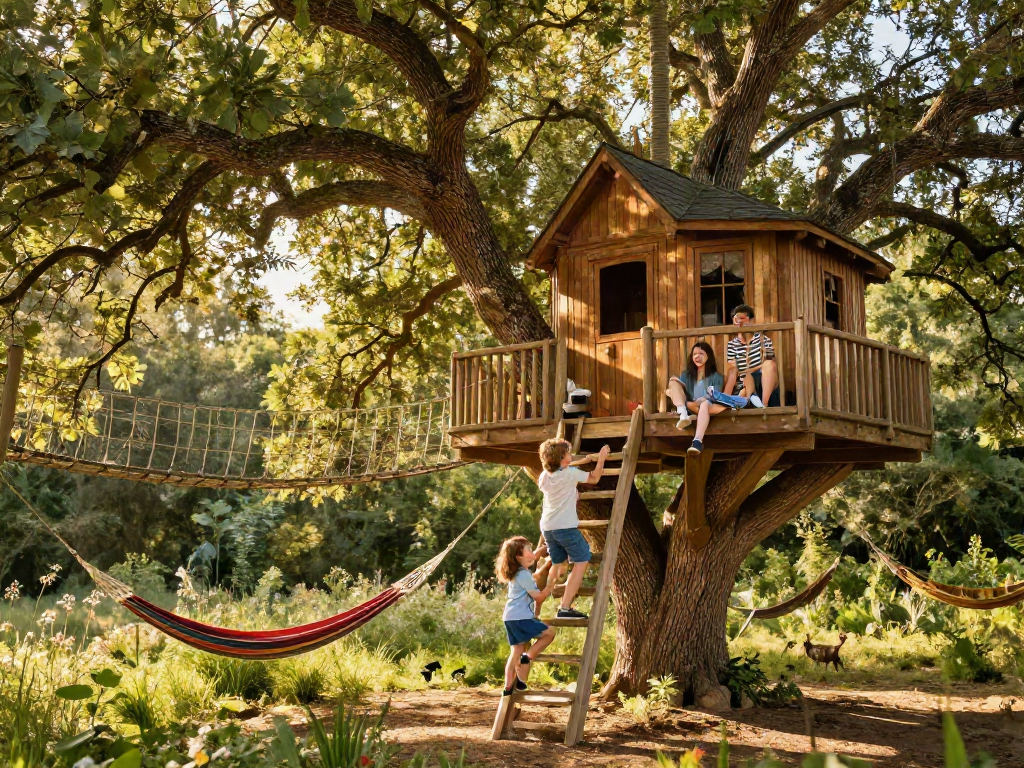
- Treetop Walkways: Connect your tree house to other structures or platforms.
- Rope Bridges: Add an element of adventure while ensuring safety with robust design.
- Outdoor Living Spaces: Deck areas can serve as perfect locations for barbecues or gathering with friends.
Eco-Friendly Practices for Sustainable Living
Integrating eco-friendly practices into your tree house life can significantly impact your environmental footprint. Here are some actionable tips:
- Rainwater Harvesting: Install systems to collect rainwater for irrigation and other non-potable uses.
- Solar Power: Incorporating solar panels can reduce reliance on fossil fuels and lower energy bills.
- Native Landscaping: Planting local flora supports biodiversity and is easier to maintain.
Decor and Furnishing Ideas to Personalise Your Tree House
Personalising your tree house can create an inviting atmosphere. Here are some décor ideas:
- Natural Textures: Use materials like rattan, wool, and wood to enhance the organic vibe.
- Colour Schemes: Opt for earthy tones to blend the structure with its surroundings.
- Art and Accessories: Displaying local artwork can add character and a sense of place.
Maintaining Your Tree House
Maintaining a tree house is essential for ensuring its longevity and safety. Regular upkeep can prevent larger issues down the line.
Routine Checks: Ensuring Safety and Durability
Conduct routine inspections to assess the condition of your tree house. Look for signs of wear, damage, or any potential safety hazards, including:
- Structural integrity of the tree and the house itself.
- Condition of materials, especially wood, for signs of rot or pests.
- Safety features like railings and ladders for potential wear and tear.
Seasonal Maintenance Tips for Tree Houses
Each season presents unique challenges for tree house maintenance. Here's a breakdown of what to focus on:
- Spring: Inspect for winter damage and clean gutters and rainwater collection systems.
- Summer: Check for pests and ensure that your tree house is equipped to handle rising temperatures.
- Autumn: Clear leaves and branches from the roof and check for structural stability.
- Winter: Prepare for snow load and check insulation if the tree house is heated.
Handling Common Repairs and Upgrades
Being proactive about repairs can save time and resources in the long run. Common repairs may include:
- Replacing damaged wood or roofing materials.
- Updating plumbing and electrical systems.
- Reinforcing structural elements as necessary.
Future Trends in Tree House Living
The future of tree house living promises exciting developments as technology and design evolve. Staying informed can help you adapt and enhance your tree house experience.
Predictions for Eco-Friendly Tree House Design by 2026
As the focus on sustainability grows, expect to see tree houses incorporating more eco-friendly features. Innovations may include:
- Advanced Energy Solutions: Integrating smart technology for energy efficiency management.
- Biophilic Design: Structures designed to connect occupants more directly with nature.
The Rise of Technology in Tree House Living
The integration of technology is set to revolutionise tree house living. Anticipate advancements such as:
- Smart Home Features: Automation for lighting, heating, and security.
- Virtual Reality Interfaces: Enhancing entertainment and engagement while enjoying the surrounding landscape.
Community and Connection: The Social Aspects of Tree House Life
Tree houses are not just about individual experiences; they also foster community connections. Expect to see:
- Tree House Communities: Developing clusters of tree houses that encourage social interactions.
- Workshops and Events: Hosting gatherings that promote sustainability, creativity, and learning opportunities.
Frequently Asked Questions
How long do treehouses last?
With proper maintenance and construction techniques, a well-built tree house can last anywhere from 10 to 30 years or more.
Can you live in a treehouse full-time?
Yes, many individuals and families live in tree houses full-time, provided they are designed with adequate amenities and safety features.
Where can I build a treehouse?
You can build a tree house in your backyard, at holiday homes, or in designated areas that allow such constructions, provided you adhere to local regulations.
How can I make my treehouse more eco-friendly?
Implementing solar power, rainwater harvesting, and using sustainable materials are excellent ways to enhance the eco-friendliness of your tree house.
What are the best materials to use for tree house building?
Reclaimed wood, bamboo, and composite materials are ideal choices that provide durability while being environmentally responsible.