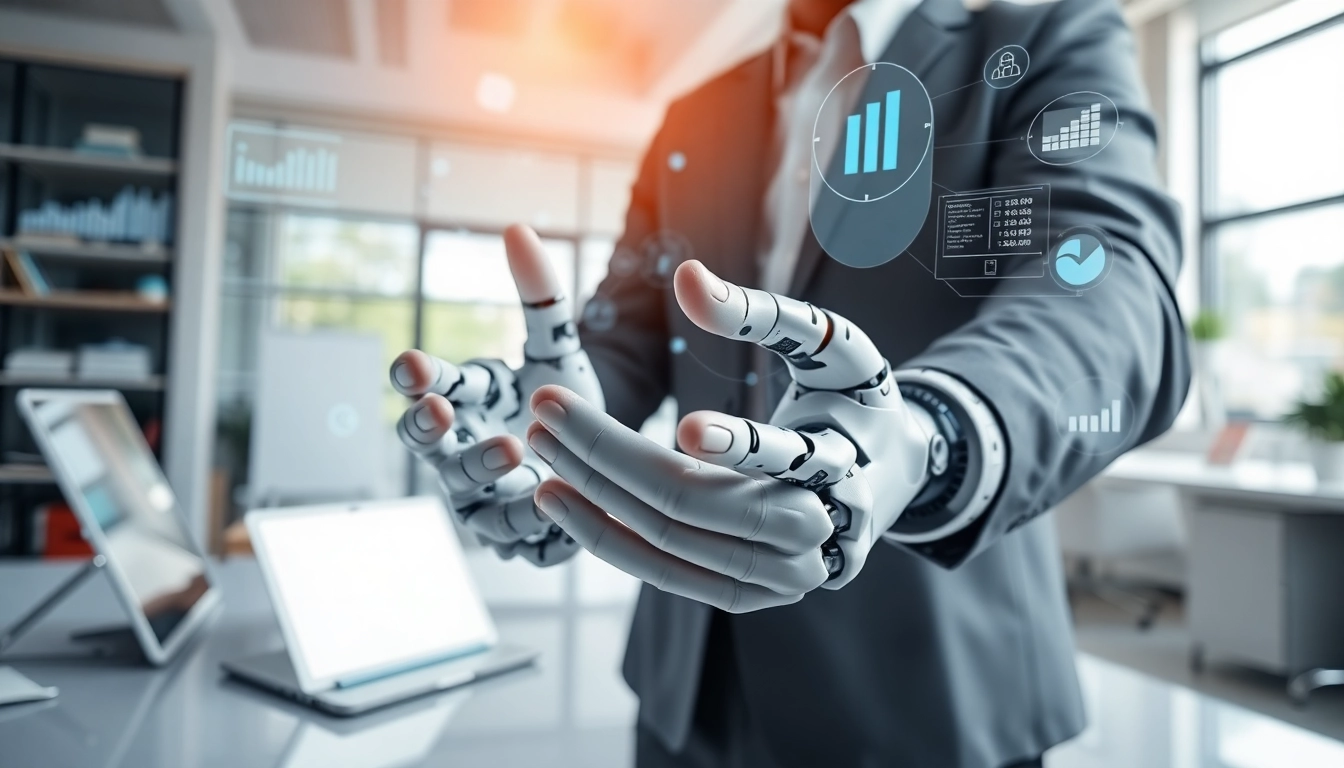
The Concept of Ai agents
What are Ai agents?
In the realm of Ai agents, the term refers to intelligent software systems designed to perform a variety of tasks autonomously. These entities perceive their environment, make decisions, and take actions based on the information they gather. Essentially, an Ai agent functions as an autonomous operative, capable of handling specific jobs ranging from data analysis to customer interaction. They can adapt and learn from experiences, which significantly enhances their operational efficacy.
How Ai agents Operate
Ai agents operate through several core functionalities. Firstly, they perceive their environment using various sensors and data inputs, whether that be through text, speech, or sensory data. Next, they interpret this data and make decisions in real-time, which can involve simpler tasks like responding to queries or more complex activities like orchestrating workflows between other software systems. Notably, the integration of machine learning allows these agents to improve over time, analyzing past interactions to enhance future decision-making processes.
Benefits of Using Ai agents
The implementation of Ai agents brings forth numerous advantages. One of the most significant benefits is efficiency—Ai agents can handle repetitive tasks tirelessly, allowing human employees to focus on strategic and creative initiatives. Additionally, they can provide real-time insights based on data, improving decision-making processes. This allows organizations to remain agile and responsive to market demands. Ai agents also serve to enhance customer experiences by providing more personalized and timely interactions across various channels.
Types of Ai agents
Reactive Ai agents
Reactive Ai agents operate based on current stimuli from their environment without the capability to form memories or anticipate future events. They respond to specific inputs with pre-programmed outputs, making them effective for straightforward tasks that require immediate responses but lacking in adaptability. Common applications include chatbots that answer customer queries or automated response systems designed to deliver instant replies.
Limited Memory Ai agents
Unlike their reactive counterparts, limited memory Ai agents can store past experiences to inform future decisions. They leverage historical data to function more effectively, making them ideal for tasks that demand some level of context comprehension, such as recommendation systems or virtual assistants. These Ai agents continuously learn and evolve based on user interactions, which enhances their relevance and accuracy over time.
Self-aware Ai agents
Self-aware Ai agents represent the pinnacle of intelligent systems, possessing a level of consciousness that enables them to understand their own states and environments. While this type of Ai is mostly theoretical at this point, envisioning self-aware agents opens a wealth of possibilities for autonomous decision-making. The day we develop self-aware Ai agents, they may operate independently across various sectors, achieving tasks and adapting their methods on their own.
Implementation of Ai agents in Business
Steps to Integrate Ai agents
To effectively integrate Ai agents into a business, organizations should follow a structured approach. First, assess operational needs to identify areas where Ai agents could drive value. Second, establish clear objectives for what the Ai agent should achieve. Next is the selection of appropriate technology that fits the requirements. Following this, proceed with training the Ai agent and deploying it in a controlled environment to evaluate its performance before a full-scale rollout.
Common Use Cases for Ai agents
Ai agents have a wide array of use cases spanning various industries. Customer support is a common application, where agents assist users in real-time with inquiries or issues. In e-commerce, Ai agents personalize shopping experiences through tailored recommendations. Additionally, they play a pivotal role in data analysis, helping organizations unearth insights quickly and efficiently. Marketing automation and finance management are other areas where Ai agents have proven invaluable.
Evaluating the Risks of Ai agents
Despite their transformative potential, integrating Ai agents comes with inherent risks. These include ethical concerns, data privacy issues, and the potential for over-reliance on automated systems. To mitigate these risks, businesses should conduct thorough assessments of the potential implications of deploying Ai agents. Regular audits of Ai performance and compliance with regulations are essential steps in ensuring accountability and safety in their operations.
Performance Metrics for Ai agents
Measuring Effectiveness of Ai agents
To measure the effectiveness of Ai agents, businesses must adopt a multifaceted approach. Key performance measures include accuracy in task execution, customer satisfaction rates, and operational efficiency metrics. By quantifying these aspects, organizations can determine the overall impact of their Ai agents in achieving set objectives and delivering value over time.
Key Performance Indicators (KPIs)
Essential KPIs for Ai agents vary by application but typically include response time, resolution rates, and user interaction levels. Monitoring these indicators provides insights into the agent’s performance and identifies areas for refinement. Furthermore, customer feedback and engagement rates are critical in gauging how well the Ai agent serves its intended purpose.
Continuous Improvement Strategies
Continuous improvement is vital for maximizing the effectiveness of Ai agents. Organizations should invest in regular training updates to refine the agent’s learning algorithm, allowing it to adapt to evolving environments. Implementing a feedback loop from users can also significantly enhance the quality of responses and interactions. Periodically reviewing and adjusting the strategy based on performance data ensures that Ai agents remain aligned with user needs.
Future of Ai agents
Emerging Trends in Ai agents
The future landscape for Ai agents is poised for significant evolution. Emerging trends such as hybrid Ai, which combines machine learning with heuristic approaches, promise improved decision-making capabilities. Additionally, as advancements in natural language processing continue, Ai agents will become increasingly adept at understanding and responding to complex human interactions, fostering deeper connections in customer service.
Potential Impact on Job Markets
The adoption of Ai agents is reshaping job markets across multiple sectors. While they automate tasks traditionally performed by humans, they simultaneously create demand for new roles focused on managing and developing these intelligent systems. A focus on reskilling the workforce will be crucial in transitioning to an Ai-integrated environment, allowing employees to harness Ai capabilities rather than compete against them.
Regulatory Considerations for Ai agents
The growth of Ai agents necessitates careful consideration of regulatory frameworks to address ethical and privacy concerns. As governments analyze how to regulate Ai technology, it will be crucial for organizations to remain compliant with evolving laws. Strong data governance, transparency in Ai functionalities, and user consent practices will be essential in fostering trust and responsible innovation.
Frequently Asked Questions (FAQs)
What is an Ai agent?
An Ai agent is an intelligent software system that autonomously performs tasks, makes decisions, and interacts with its environment. It learns from experiences to improve its performance over time.
How do Ai agents operate?
Ai agents operate by perceiving their environment, processing data, and acting based on their analysis. They utilize machine learning to enhance their decisions through continuous improvement.
What are the benefits of using Ai agents?
Ai agents improve efficiency, enhance customer experiences, and provide real-time insights, allowing human employees to focus on more strategic and innovative tasks.
What are some common uses for Ai agents?
Common uses for Ai agents include customer support, data analysis, e-commerce recommendations, and automating marketing processes, among others.
What risks are associated with Ai agents?
Risks include ethical concerns, data privacy issues, and potential over-reliance on automation. Regular audits and compliance checks can help mitigate these risks.